
In 2026, Indonesia’s coal-to-chemicals agenda is evolving under a mix of market pressure and policy direction. A key theme is coal gasification, where producers pursue higher-value outputs such as methanol, DME, syngas, ammonia, and coke. The economic backdrop in Indonesia also matters for investor confidence: Indonesia Investments reported GDP growth of 5.29% year-on-year in Q2-2026, inflation of 3.23% year-on-year in October 2026, and a BI Rate of 5.75% in October 2026. These numbers frame a year in which capital allocation decisions and project financing discipline are central to downstream execution.
Coal downstreaming is also being reinforced through regulation. Mordor Intelligence noted that revised mining regulation PP 25/2024 obliges permit holders to show concrete value-addition plans—explicitly including syngas, methanol, or DME production—before qualifying for license extensions. The same source described fiscal perks such as accelerated depreciation, VAT exemptions, and import-duty relief on gasification equipment. It also highlighted pilot projects in South Sumatra that aim to convert up to 6 million tons per year of lignite once commercialized, potentially absorbing output that would otherwise face export-market discounts. Together, these measures attempt to turn compliance into a commercial pipeline for coal-derived chemicals.
Why DME Stalled and Why Methanol Is Taking the Lead
Indonesia Investments described how repeated stalling of coal-to-DME gasification projects has pushed attention toward methanol as a nearer-term downstream anchor. The report pointed to a USD 2 billion coal-to-DME flagship plan in Tanjung Enim, South Sumatra, involving Bukit Asam, Pertamina, and Air Products, but noted that Air Products exited Indonesia’s gasification ventures in early 2023 to prioritize hydrogen and ammonia investments elsewhere. The article also quoted Perhapi’s Rizal Kasli, who argued the DME stalemate is economic rather than technological: producing DME requires an additional step after methanol synthesis, increasing capital expenditure, energy use, and operating costs. Without targeted government subsidies—especially when competing with subsidized imported LPG—investors may find selling methanol more feasible than converting it into DME.
Even so, DME remains part of Indonesia’s strategic conversation because it is linked to reducing reliance on imported LPG, as Indonesia Investments noted. The government’s downstreaming officials also keep the door open to revived DME execution. Rizwan Aryadi Ramdhan from the Ministry of Investment and Downstreaming (BKPM) said the coal value chain is not limited to one output and that the government is attempting to revive the Tanjung Enim DME project while coordinating with Danantara, the national investment management agency. He added that interest exists from foreign and domestic private investors, although talks were still exploratory. This is the heart of the Indonesia coal gasification DME downstream narrative in 2026: DME is strategically attractive, but commercial logic pushes projects to prove themselves through methanol first.
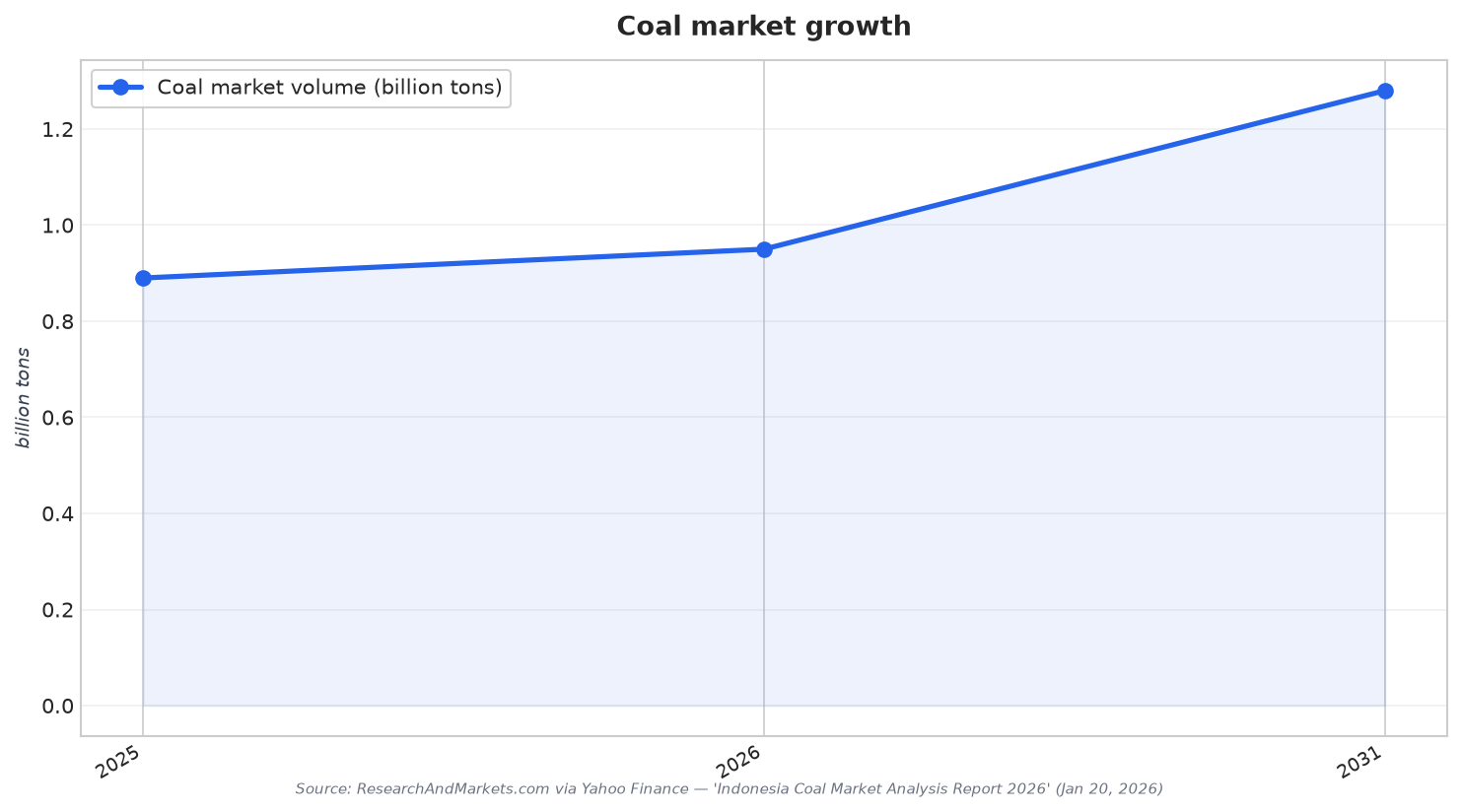
Market forecasts add another layer of incentive for integrated downstream development. Expert Market Research valued Indonesia’s oil and gas downstream market at USD 69.49 billion in 2025 and forecast a 7.10% CAGR for 2026–2035 to reach USD 137.98 billion by 2035. The same report stated that in January 2026 Indonesia introduced six downstream energy projects, including coal gasification facilities designed to produce methanol and strengthen petrochemical feedstock supply chains. Separately, ResearchAndMarkets.com projected Indonesia’s coal market to grow from 0.89 billion tons in 2025 to 0.95 billion tons in 2026 and reach 1.28 billion tons by 2031, with 6.24% CAGR over 2026–2031, while also noting policy incentives for gasification and DME initiatives. These outlooks do not remove cost challenges, but they explain why coal-to-chemicals remains on board agendas through 2026.
What is driving Indonesia’s push from coal to chemicals in 2026?
Why have Indonesia’s coal-to-DME projects struggled to progress?
What happened to the Tanjung Enim coal-to-DME plan?
How does Indonesia’s coal gasification and DME downstream effort connect to methanol?
What concrete coal gasification activity is mentioned for South Sumatra?