
Client
Issues
The client experienced inconsistent product availability, uneven technical support, overlapping partner roles, and long lead times for spare parts. Some distributors had strong customer relationships but limited inventory and service capability. Others held stock but did not actively develop industrial accounts. Management needed to understand where value was being created, where bottlenecks occurred, and which activities should remain with partners or move under greater direct control.
Solution
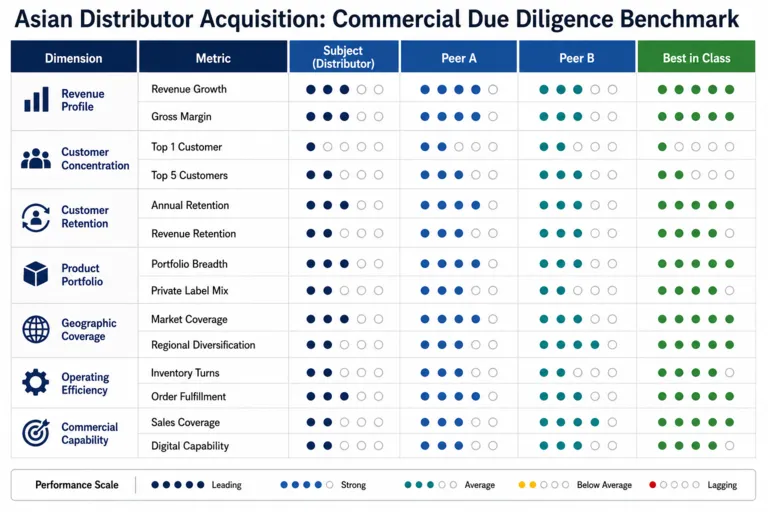
We conducted a Malaysia B2B value chain analysis covering suppliers, import flows, distributors, service providers, industrial customers, inventory, technical support, and after-sales requirements. The engagement created a clearer view of stakeholder roles, commercial dependencies, margin distribution, and the activities most important to customer value.
Approach
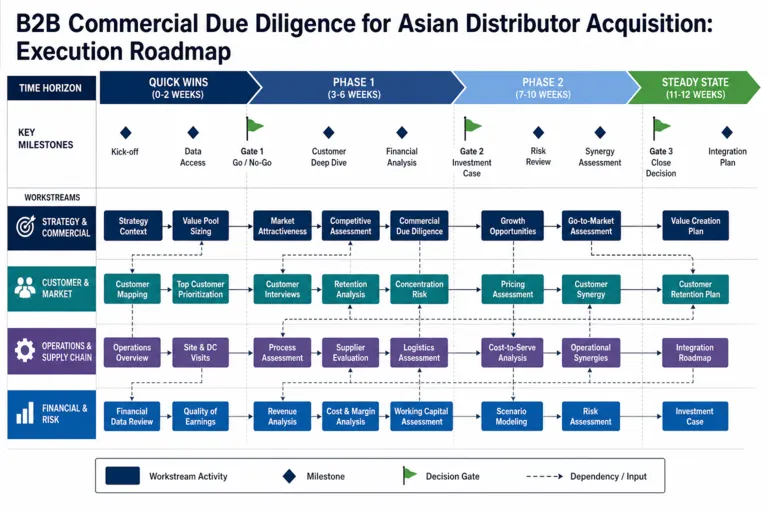
Our work combined stakeholder interviews, channel mapping, order-flow analysis, distributor benchmarking, and service-performance assessment. We examined how equipment and spare parts moved between Klang Valley, Penang, Johor, and selected industrial areas. Customers, distributors, technical partners, and service teams were interviewed to assess product availability, lead times, installation support, maintenance requirements, and commercial responsibilities.
Recommendations
We recommended centralising selected high-demand spare parts, clarifying distributor territories, and assigning technical responsibilities according to partner capability. The client should retain direct oversight of strategic accounts, technical standards, and partner performance, while distributors continued to manage local sales and routine fulfilment. A preferred-service-partner structure was also proposed for complex maintenance requirements.
Engagement ROI
Within 12 months, product availability across priority accounts improved by approximately 10 percentage points, while customer complaints related to lead times declined by around 18%. Clearer partner responsibilities reduced duplication, improved accountability, and helped the client focus internal resources on activities that created the greatest commercial value.