
Client
Issues
The Indonesian opportunity appeared broad, but buyer readiness differed significantly between industrial sectors and operating locations. Some companies prioritised electricity-cost reduction, while others focused on energy reliability, sustainability targets, or protection from price volatility. The client also needed to decide whether to establish direct commercial teams, work through local engineering and procurement partners, or use a hybrid model.
Solution
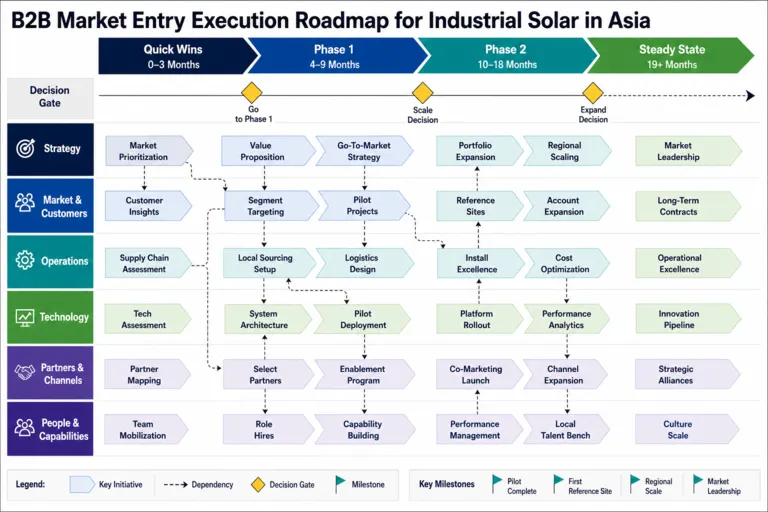
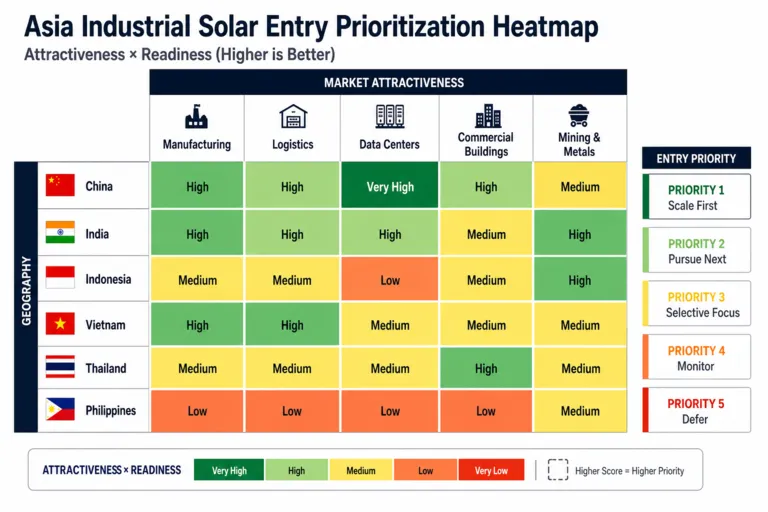
We developed an Indonesia B2B market-entry strategy based on industrial demand, customer economics, competitor activity, project feasibility, and partnership opportunities. The engagement helped the client identify the most attractive customer segments, understand the commercial drivers behind solar investment, and design a phased expansion model.
Approach
Our work combined market analysis with interviews involving factory owners, energy managers, finance directors, industrial-estate operators, EPC companies, and technology providers. We assessed electricity consumption, operational reliability, investment criteria, financing preferences, project sizes, procurement processes, and competitor propositions across Greater Jakarta, West Java, Central Java, and selected industrial locations.
Recommendations
We recommended prioritising food processing and selected light-manufacturing businesses with high daytime energy use and clear pressure to reduce operating costs.
The client should lead with energy reliability and financial outcomes rather than sustainability alone. A partner-led entry model was advised, supported by technical standards, project-qualification criteria, and stronger sales tools for demonstrating payback and operating savings.
Engagement ROI
Within 18 months, the company secured several projects from the two priority industrial segments.
The total value of contracts secured within these segments increased by approximately 15%, while proposal win rate improved by around six percentage points. The partner-led model also expanded market coverage without requiring large in-country teams during the initial phase.