
Client
Issues
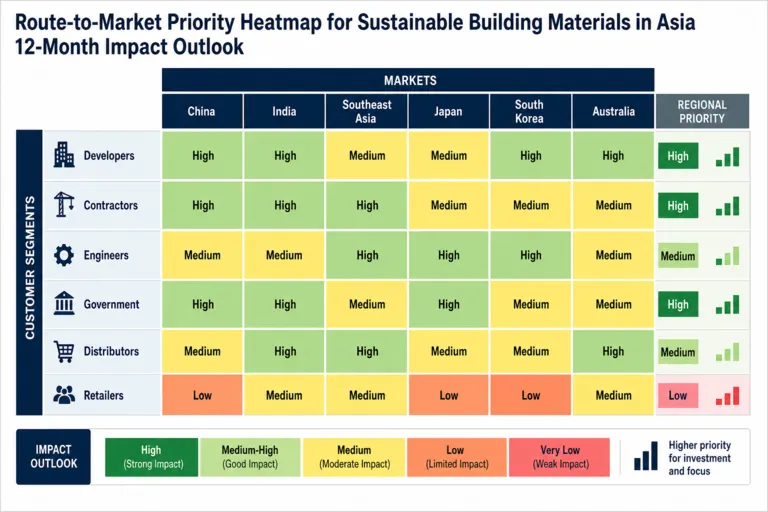
The client lacked clarity on which project segments and locations offered the strongest near-term potential. Product-selection processes varied between commercial developments, industrial facilities, and infrastructure projects, while buyers considered technical performance alongside price, availability, compliance, installation support, and supplier credibility. Management also needed to decide whether to expand through direct sales, specialist distributors, or a combined model covering Ho Chi Minh City, Hanoi, and selected industrial provinces.
Solution
We developed a Vietnam market-entry and route-to-market strategy focused on demand validation, buyer priorities, competitive positioning, project specifications, and channel development. The engagement helped the client understand where its products could compete effectively, which stakeholders influenced material specifications, and what local capabilities were required to support sustainable growth.
Approach
Our work combined market analysis, competitor benchmarking, and interviews with developers, architects, consultants, contractors, distributors, and procurement professionals. We assessed construction activity, sustainability requirements, pricing, technical standards, buyer readiness, and channel structures. Potential distributors were also evaluated based on market coverage, technical expertise, customer relationships, and willingness to develop the category.
Recommendations
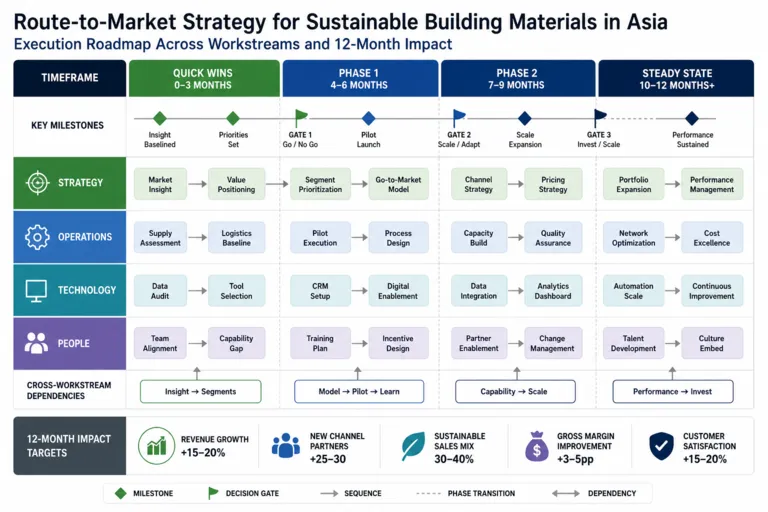
We recommended prioritising commercial and industrial projects where energy efficiency, indoor performance, and operating costs carried greater weight. The company should engage architects and engineering consultants earlier, appoint specialist distributors in southern and northern Vietnam, strengthen local technical support, and refine its value proposition around measurable project outcomes. Expansion into lower-readiness segments should be delayed until stronger demand and partner capabilities emerged.
Engagement ROI
Within 12 months, the client appointed two specialist distributors and increased its qualified B2B sales pipeline by approximately 30%. Revenue from targeted contractor and developer accounts grew by around 12%, while stronger engagement with architects and engineering consultants generated several new project specifications. The phased approach also avoided the cost and management burden of launching nationally from the beginning.